
Your business is making money. So why does it sometimes feel like there's never enough in the bank?
You've had a good month. Sales are coming in, customers are paying, and your business is growing.
On paper, things look promising.
But when it's time to pay suppliers, cover payroll, settle expenses, or pay yourself, the money doesn't seem to stretch as far as it should.
Sound familiar?
It's one of the most frustrating situations a business owner can experience: running a profitable business but constantly feeling short on cash.
And here's something worth understanding:
Profitability and cash flow are not the same thing.
A business can be profitable and still struggle to meet its financial obligations. Understanding why this happens is one of the most important steps toward building a financially sustainable business.
Let's look at what's really happening.

1. You're Making Sales, But You're Not Getting Paid Quickly Enough
One of the biggest cash flow challenges for small businesses is the gap between making a sale and actually receiving the money.
You might complete a project in October, send an invoice, and record the revenue. But if your customer has 30, 45, or even 60 days to pay, that money isn't available to cover today's expenses.
Meanwhile, your rent, payroll, suppliers, and other operating costs still need to be paid.
This is particularly challenging for businesses that work with corporate clients, offer payment terms, or rely on a small number of large customers.
What you can do:
Review how long customers typically take to pay.
Establish clear payment terms before work begins.
Follow up on overdue invoices consistently.
Consider deposits or milestone payments for larger projects.
Review your accounts receivable regularly.
Remember, a sale isn't the same as cash in the bank.
2. Your Expenses Are Growing Faster Than Your Revenue
Business growth often comes with additional expenses.
You hire another employee, upgrade your software, move into a bigger office, increase your marketing budget, or invest in new equipment.
Individually, these decisions may make sense.
But when several new expenses arrive at once, they can put significant pressure on your cash flow.
The problem is that business owners sometimes increase their spending based on expected revenue rather than money the business is consistently bringing in.
What you can do:
Review your operating expenses regularly. Understand which costs are necessary, which are increasing, and which are actually contributing to business growth.
Before committing to a new expense, consider how it will affect your cash flow over the coming months.
Growth should strengthen your business, not leave it struggling to fund its day-to-day operations.
3. You're Confusing Revenue With Available Cash
This is one of the most common financial misunderstandings among business owners.
Revenue is the money your business earns from selling products or services. Cash flow measures the money actually moving into and out of your business.
They are connected, but they tell different stories.
For example, your business might generate $40,000 in revenue during a month. That sounds impressive.
But consider what happens when:
$10,000 is still sitting in unpaid customer invoices.
$12,000 goes toward operating expenses.
$6,000 goes toward payroll.
$4,000 goes toward loan repayments and other obligations.
The amount of cash actually available is very different from the original $40,000 in revenue.
This is why looking at sales figures alone can give you an incomplete picture of your financial health.
What you can do:
Look beyond revenue. Review your profit and loss statement, balance sheet, and cash flow information together.
Each report tells you something different about your business.

4. You're Taking Money Out Without a Clear Owner Compensation Plan
Your business should support you financially. After all, you're one of the reasons it exists.
But when personal withdrawals happen whenever money is available, it can become difficult to understand how much cash the business actually needs to operate.
Perhaps you take money out to cover personal expenses, make an unexpected purchase, or simply because the bank balance looks healthy.
Over time, inconsistent withdrawals can make cash flow harder to predict.
The solution isn't necessarily to stop taking money out. It's to establish a thoughtful approach to owner compensation that considers your business structure, profitability, cash requirements, and personal financial needs.
What you can do:
Work with your CPA to determine an appropriate owner compensation or withdrawal strategy for your business structure.
Make sure personal withdrawals are recorded correctly and that the business retains enough cash to meet its operating obligations.
5. You're Not Planning for Taxes and Other Upcoming Obligations
One of the easiest ways to create a cash flow problem is to treat every dollar in your business bank account as money available to spend.
But some of that money already has a purpose.
You may have upcoming payroll taxes, sales tax obligations, estimated income tax payments, insurance premiums, loan repayments, or annual business expenses.
If you haven't planned for these obligations, they can arrive at the worst possible time.
What you can do:
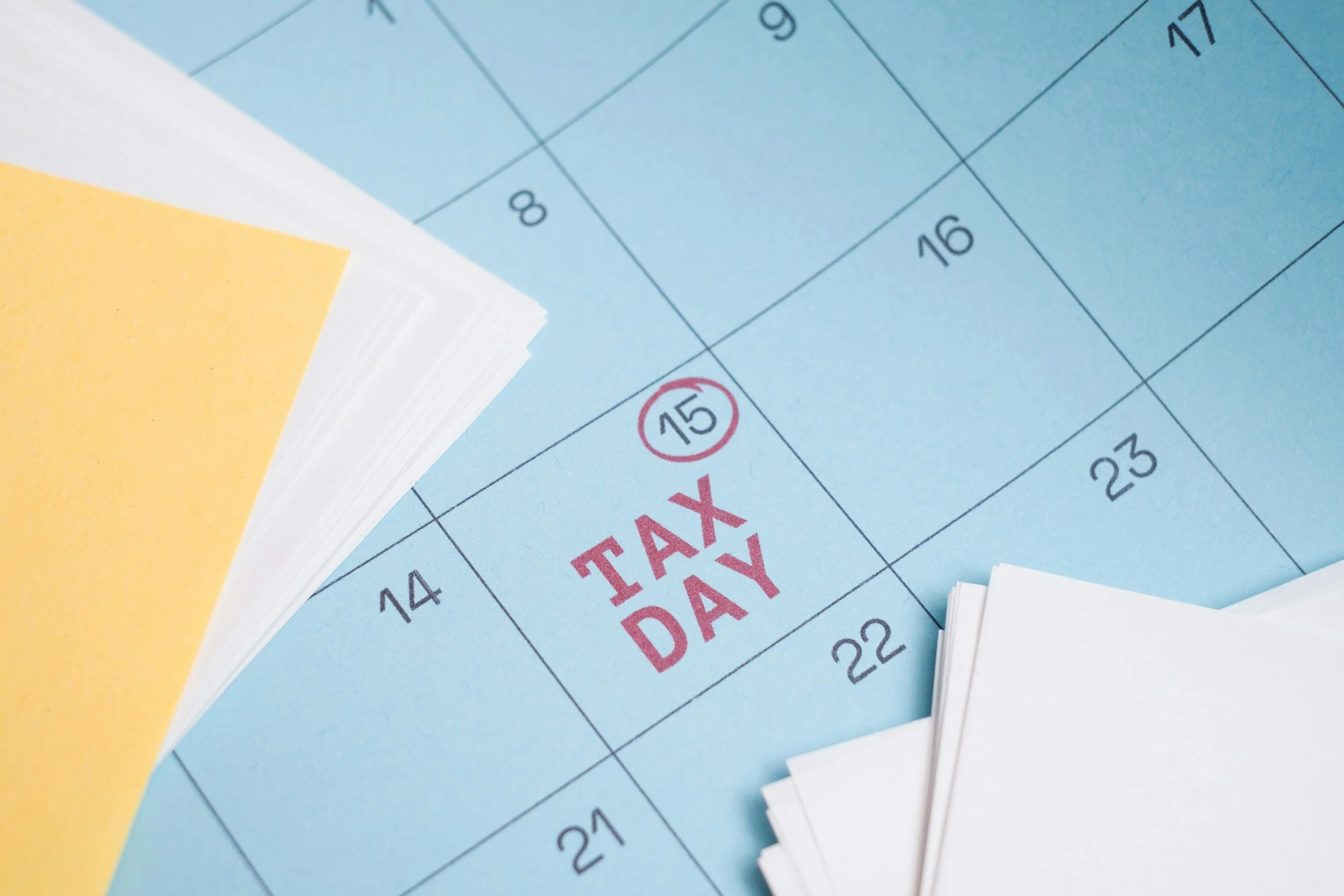
Review upcoming tax and payment deadlines.
Estimate your tax obligations with your CPA.
Set aside appropriate funds for taxes and other commitments.
Keep track of recurring annual and quarterly expenses.
Include these obligations in your cash flow forecast.
Planning ahead gives you more control over when money needs to leave your business
6. You're Making Financial Decisions Without a Cash Flow Forecast
If you're only looking at what happened last month, you're making decisions using yesterday's information.
A cash flow forecast helps you look ahead.
It estimates when money is expected to come in, when expenses will need to be paid, and how much cash your business may have available over a particular period.
This can help you identify potential shortfalls before they become urgent problems.
For example, you might discover that February is likely to be a particularly expensive month because of annual insurance payments, payroll commitments, and slower customer collections.
Knowing this in November gives you time to prepare.
Without a forecast, you may only discover the problem when the money is already needed.
What you can do:
Start with a rolling 13-week cash flow forecast.
Estimate your expected receipts, operating expenses, payroll, debt payments, taxes, and other significant obligations.
Update it regularly as actual results come in and your expectations change.
You don't need to predict every dollar perfectly. You need enough visibility to make better decisions.
7. Your Books Aren't Giving You an Accurate Picture
Sometimes the problem isn't necessarily the business itself. It's the quality of the financial information you're using to make decisions.
If your books are behind, transactions are incorrectly categorized, bank accounts aren't reconciled, or outstanding invoices haven't been reviewed, you may be making important decisions based on incomplete information.
You might think you have more money available than you actually do.
Or you might overlook expenses that are quietly reducing your profitability.
Accurate bookkeeping isn't just about preparing for tax season. It's about understanding what's happening in your business while there's still time to respond.
What you can do:
Make sure your books are updated regularly, bank and credit card accounts are reconciled, income and expenses are properly recorded, and outstanding balances are reviewed.
Good financial information gives you a much stronger foundation for decision-making.
The Three Numbers Every Business Owner Should Understand
If you want a clearer picture of your business's financial health, start by understanding these three numbers:
Revenue: How much money is your business generating from its sales and services?
Profit: How much remains after accounting for your business expenses?
Cash flow: How much cash is actually coming into and leaving your business, and when?
These numbers work together, but they are not interchangeable.
A business can have strong revenue, report a profit, and still experience cash shortages because customers haven't paid yet or significant expenses are due.
Understanding all three helps you see beyond the sales figures and make decisions based on the bigger financial picture.
Your Business Doesn't Just Need More Revenue. It Needs a Better Financial Plan.
When cash flow becomes a constant source of stress, the natural reaction is often to chase more sales.
And while increasing revenue can certainly help, more sales don't automatically solve underlying cash flow problems.
If customers are paying late, expenses are growing too quickly, taxes aren't being planned for, or financial records aren't up to date, increasing revenue may simply make the existing problems bigger.
The goal isn't just to bring more money into your business.
It's to understand how that money moves, what it needs to cover, and how to make it work toward your long-term goals.
Sometimes, the most valuable financial decision isn't making another sale. It's taking a closer look at the numbers you already have.
Get a Clearer Picture of Your Business Finances
You work hard to build your business. You deserve to understand whether it's working financially, where your money is going, and what needs to change to support sustainable growth.
At KMT Consulting, we believe accounting should do more than tell you what happened last year. It should help you understand where your business stands today and make informed decisions about what's next.
Whether you need help with bookkeeping, cash flow management, tax planning, or a more comprehensive look at your business finances, having the right financial partner can make a meaningful difference.
Ready for a clearer financial picture?
👉 Visit www.kmtconsultingllc.com to connect with KMT Consulting and schedule a consultation.
Because a profitable business should also be a financially sustainable one.